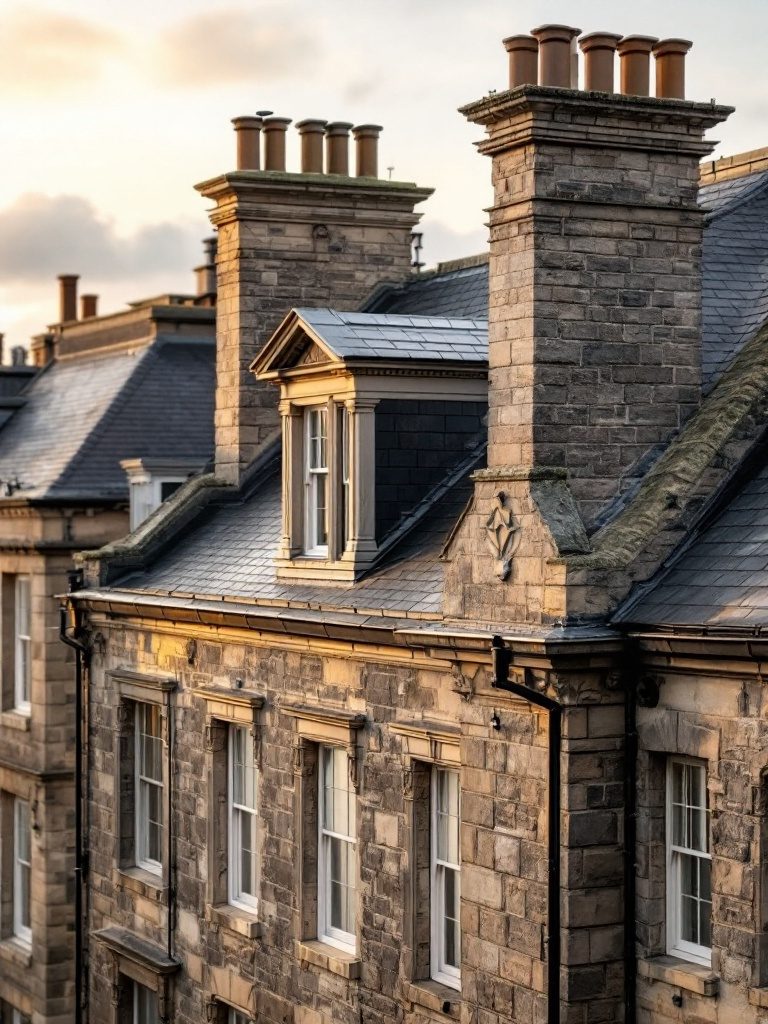
An A-listed Edinburgh New Town townhouse with a traditional Scotch slate roof and lead detailing
A & B listed · conservation area · traditional buildings

Listed-building roofing, done the way the fabric demands

Edinburgh's finest roofs are also its most protected. We restore A & B listed slate and lead roofs to Historic Environment Scotland practice — like-for-like materials, the right consents, and a finish that respects the next two centuries. One repair. Lasting peace of mind.
HES conservation practice
Listed-building consent liaison
Salvaged & matched Scotch slate
Hand-dressed code-8 lead
10-year workmanship guarantee
Why it needs a specialist

A listed roof is not a normal roofing job

Around half of Edinburgh's building stock sits inside a conservation area, and thousands of tenements and townhouses are A or B listed. On these buildings the roof isn't just weatherproofing — it's protected historic fabric, and the wrong repair can be unlawful as well as ugly.

A modern concrete tile, a smear of black mastic, or a bright new machine-cut slate on a Georgian frontage stands out for a century. Worse, unauthorised alterations to a listed building are a criminal offence — the council can require you to undo the work at your own cost. Getting it right the first time is cheaper, safer, and kinder to the building.

  • Like-for-like materials — Scotch slate, natural Welsh, code-appropriate lead, lime mortar.
  • Reversible, sympathetic detailing that a conservation officer will approve.
  • Listed-building consent handled properly — we liaise with the City of Edinburgh Council.
  • Traditional skills: welted lead joints, torching, sarking-board repairs, hand-cut verges.
A restored listed-building roof in Edinburgh's New Town with fresh Scotch slate and dressed lead ridges
B-listed re-slate, New Town
Before & after

Drag to see the difference conservation care makes

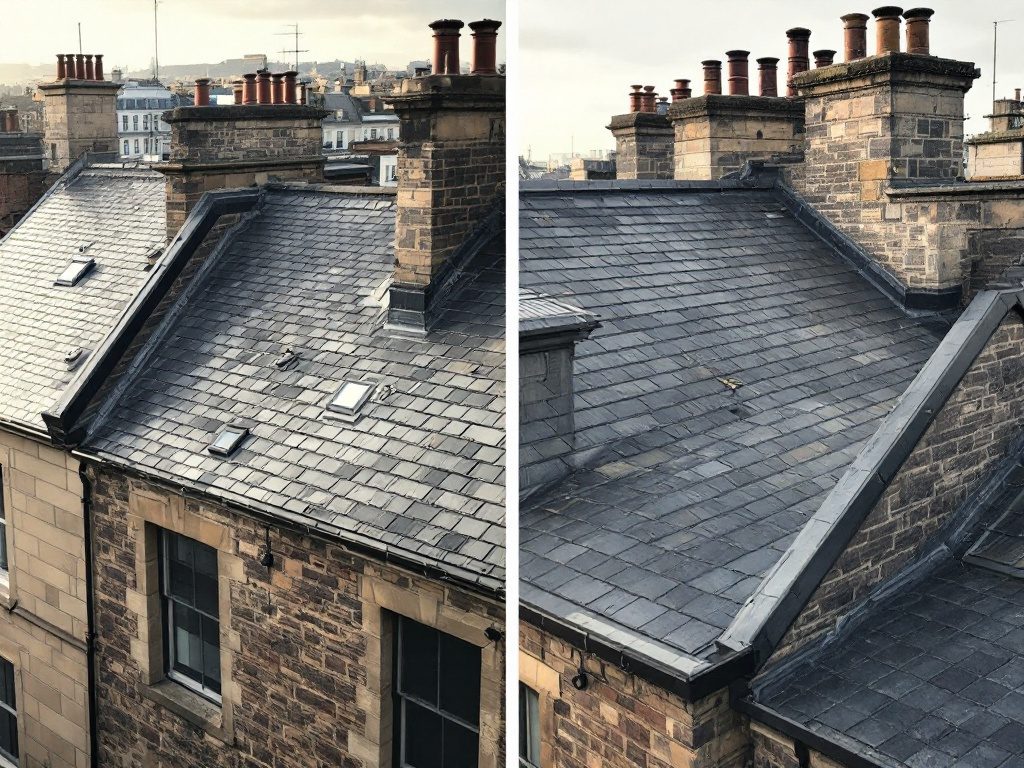
A tired, slipping slate roof on a listed Stockbridge tenement — brought back to a watertight, period-correct finish. Grab the handle and drag across.

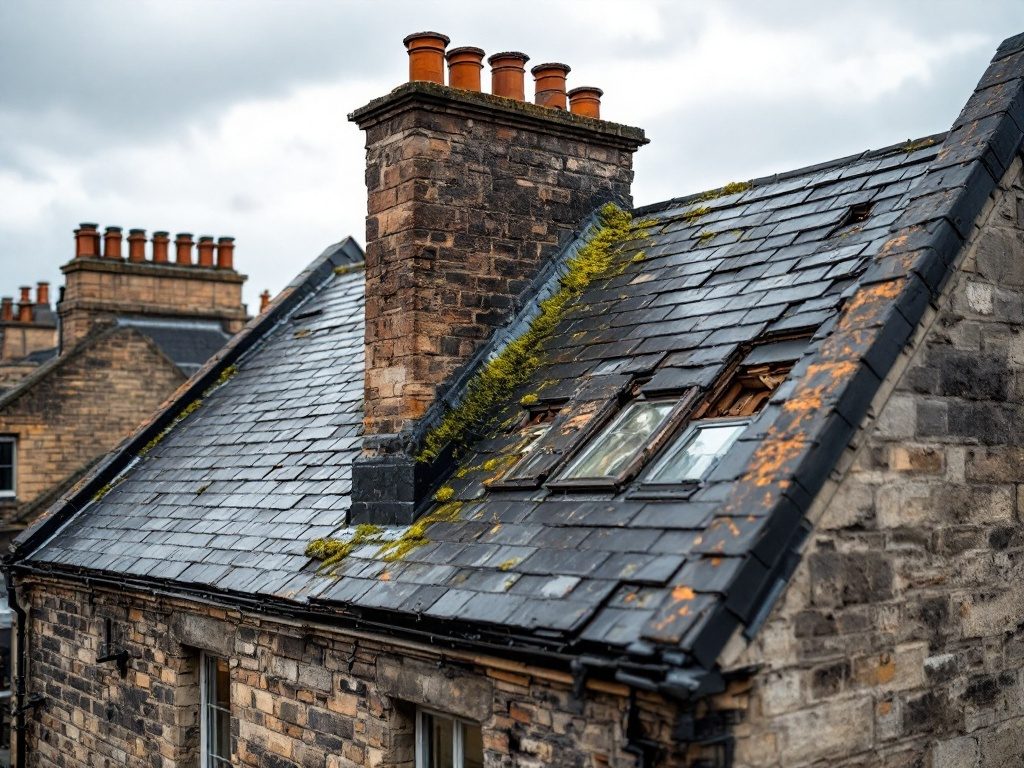
Before: a weathered listed tenement roof with slipped and missing slates and failing lead flashing After: the same roof restored with matched Scotch slate, new code-8 lead valleys and repointed chimney stack Before After

Stockbridge tenement · B-listed · full re-slate with salvaged Scotch slate, new lead valleys & chimney repointing · completed in 9 working days.

Traditional materials

The right slate, the right lead, the right mortar

Conservation is a materials discipline before it's a labour one. Match the fabric and the repair disappears into the building; get it wrong and it shouts for a hundred years.

Scotch & natural slate

Original Scottish slate is no longer quarried, so we salvage and blend it, or match with graded natural slate of the right size, colour and thickness — never a uniform machine-cut substitute on a period frontage.

Hand-dressed lead

Valleys, soakers, aprons and ridge saddles worked in the correct code (usually code 7–8), with welted and lapped joints to accommodate movement. No mastic patch-ups masquerading as flashing.

Lime mortar for stacks

Traditional chimneys breathe. We repoint in a matched lime mortar rather than hard modern cement, so the stonework can move and dry as it was built to — cement traps damp and cracks the stone.

Sarking & timber repairs

Edinburgh roofs sit on continuous timber sarking boards. We replace rotten sarking and cut timbers like-for-like, keeping the traditional build-up rather than short-cutting to modern felt-and-batten.

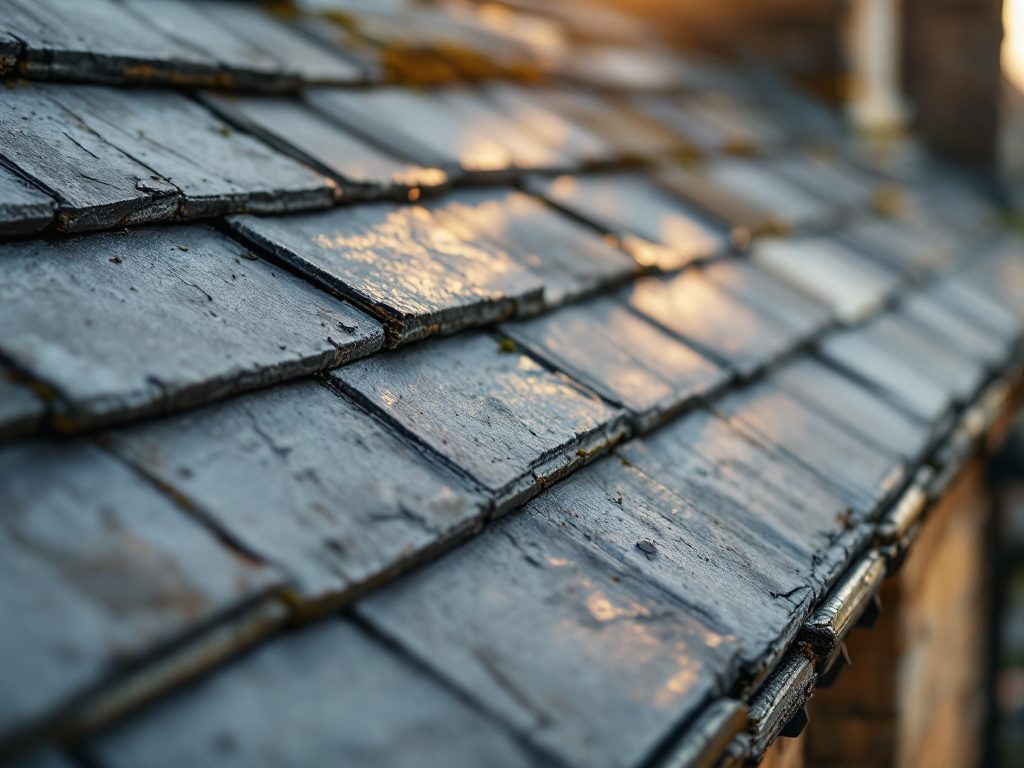
Close-up of graded Scotch slate laid in diminishing courses on an Edinburgh roof
Graded & diminishing courses
200+
Listed & traditional roofs restored
100%
Consent-compliant workmanship
Consent & HES practice

We handle the paperwork as carefully as the slates

Work to a listed building — even "like-for-like" repair — can need Listed Building Consent from the City of Edinburgh Council, and must follow Historic Environment Scotland guidance. We steer the whole process so you're never exposed.

Free drone survey & listing check

We inspect from the air, then confirm the building's listing category and whether it sits in a conservation area — so we know from day one what rules apply.

Method statement & materials schedule

A written specification of exactly what will be done and in what materials — the document conservation officers want to see, and the one that protects you.

Consent liaison with the council

Where Listed Building Consent is needed we prepare and support the application, liaising directly with the council's conservation team on your behalf.

Conservation-standard workmanship

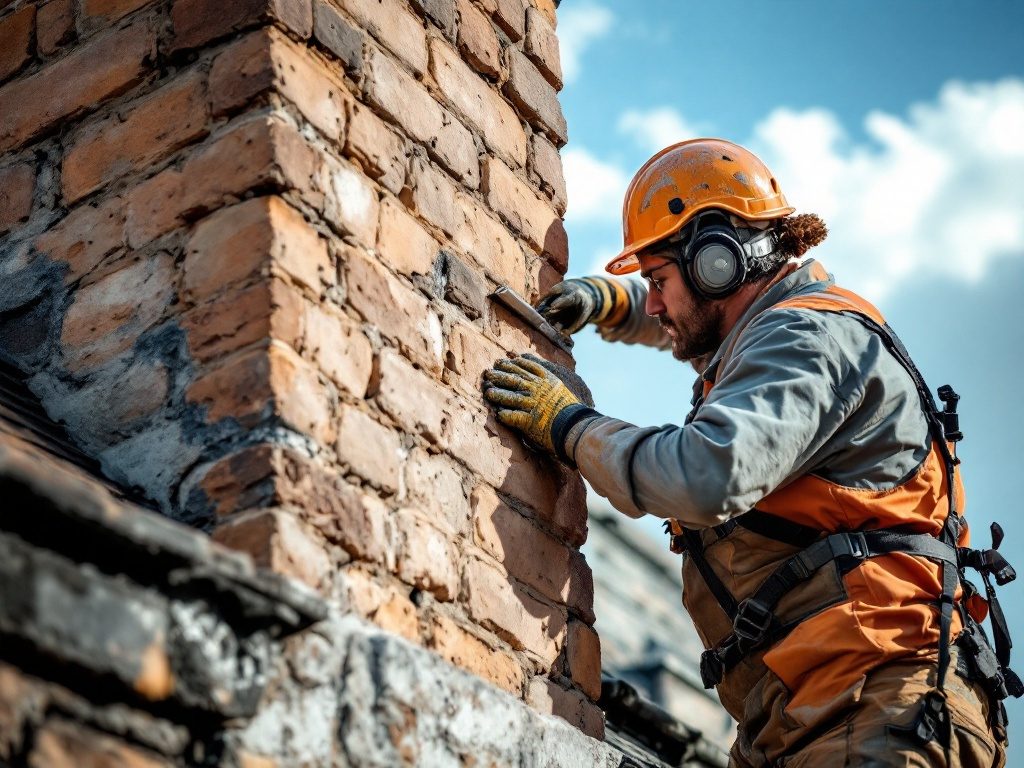
Time-served slaters and leadworkers carry out the work to HES practice, with progress photos and a tidy, netted, protected site throughout.

Sign-off & 10-year guarantee

Final inspection, completion record for your files, and a written 10-year workmanship guarantee. The building keeps its character; you keep the paperwork.

Good to know

When do you need Listed Building Consent?

As a rule of thumb, genuine like-for-like repair in matching materials often doesn't need consent — but changing materials, altering the roofline, adding rooflights, or re-slating a whole roof usually does. It's not always obvious, and the penalties for getting it wrong fall on the owner.

The safe answer: let us check before anyone lifts a slate. Our survey includes a listing and consent assessment at no charge, and we'll tell you honestly whether an application is needed.

Important: Unauthorised work to a listed building is a criminal offence in Scotland and can lead to an enforcement notice requiring the work to be reversed. A specialist quote costs nothing; an unlawful repair can cost everything twice over.
Ask us to check your building
City of Edinburgh Council liaison Historic Environment Scotland practice Conservation-area experience
Recent heritage work

Case studies from across the city

A few of the listed and traditional roofs we've brought back to life — matched, consented and guaranteed.

Restored A-listed New Town townhouse roof in matched Scotch slate
A-listed · New Town

Full conservation re-slate, Heriot Row

Slipped, patched and part-cemented over decades. We stripped, re-sarked where needed and re-slated in salvaged Scotch slate with new code-8 lead ridges — signed off by the council conservation officer.

Re-slate Lead ridges Consent obtained
Repointed traditional chimney stack in lime mortar with new cowls
B-listed · Stockbridge

Chimney rebuild & lime repointing

A leaning tenement stack repointed in matched lime mortar, cracked cans replaced and vented cowls fitted to stop damp — keeping the original stone breathing as it was built to.

Repointing Cowls Lime mortar
New hand-dressed lead valley between two traditional pitched slate roofs
Conservation area · Marchmont

Lead valley renewal, tenement

Failed valley causing water to track into the top-floor flat. Re-formed in hand-dressed code-8 lead with welted joints and new soakers — no mastic, no shortcuts, watertight for decades.

Lead valley Soakers Watertight
What owners & factors say

Trusted with Edinburgh's most protected roofs

★★★★★

They understood our A-listed building better than the surveyor did. The consent was handled without fuss and you genuinely cannot tell where the new slate ends.

EM
Eleanor M. Homeowner · Heriot Row, New Town
★★★★★

As a factor I manage dozens of listed tenements. Castlerock are the crew I call for the tricky lead and stack jobs — proper tradesmen, fixed prices, no drama with the council.

DR
David R. Property factor · Stockbridge
★★★★★

The drone footage showed us exactly what was wrong before a penny was spent, and the lime repointing on our chimney looks like it's always been there. Lasting peace of mind, just as they promise.

FC
Fiona C. Homeowner · Marchmont
Fair, fixed pricing

Transparent starting prices

Heritage work is priced per building — the slate, the access and the consents all vary — but here's where the common jobs start. Your survey turns these into one clear, fixed, written quote.

Service From Notes
Drone roof survey FREE Real footage + listing & consent check. No scaffolding.
Slate replacement £45 / slate Matched & salvaged Scotch slate where required.
Minor slate & slip repairs £180 from Re-fixing slipped slates, small watertight fixes.
Lead flashing & valleys £320 from Hand-dressed code-7/8 lead, welted joints.
Chimney repointing (lime) £650 from Matched lime mortar; cans & cowls as needed.
Full conservation re-roof POA Priced after survey & consent — fixed before we start.
Emergency call-out £120 Storm damage made safe & watertight, fast.

Prices are indicative starting points and include VAT where applicable. Every heritage job is confirmed as a fixed written quote after a free survey.

Common questions

Listed & heritage roofing, answered

Do I need Listed Building Consent to repair my roof?

Sometimes. Genuine like-for-like repair in matching materials often doesn't require consent, but re-slating a whole roof, changing materials, altering the roofline or adding rooflights usually does. Because the responsibility (and any penalty) falls on the owner, we always check as part of our free survey and tell you honestly whether an application is needed before any work begins.

What does "HES practice" actually mean for my roof?

Historic Environment Scotland publishes guidance on how traditional buildings should be repaired — favouring like-for-like materials, breathable lime mortars, hand-worked lead and reversible detailing over modern shortcuts. Working to HES practice means your repair keeps the building's character and its ability to weather naturally, which is exactly what conservation officers look for.

Can you match my old Scottish slate?

Yes. Original Scottish slate hasn't been quarried at scale for decades, so we work from salvaged stock and carefully graded natural slate matched for size, colour, thickness and coursing. On a partial repair we blend new-to-old so the patch disappears; on a full re-slate we lay in traditional diminishing courses just as the building was originally roofed.

Why lime mortar instead of ordinary cement on the chimney?

Traditional stone chimneys are built to breathe — they take on and release moisture. Hard modern cement traps that damp inside the stone, causing it to crack, spall and decay, and it's much harder to reverse. Matched lime mortar flexes and breathes with the building, which is why it's both the conservation-correct and the longer-lasting choice.

How does the free drone survey work on a listed building?

Our CAA-certified pilot flies close-up over your roof — no scaffolding, no ladders, no disruption to the building or your neighbours. You get the actual footage plus a plain-English report and, for listed and conservation-area properties, a listing and consent assessment. It costs nothing and there's no obligation to book the work.

Are you insured and guaranteed for heritage work?

Fully. We carry £5m public liability and full employer's cover, our crew are working-at-height and CSCS certified, and every job — heritage or not — comes with a written 10-year workmanship guarantee. Certificates are available on request before we start.

Free drone survey · Consent check included

Give your listed roof the specialists it deserves

Book a free, no-obligation drone survey with a listing and consent assessment built in. We'll send you the footage with a clear, fixed price — and handle the council so you don't have to. One repair. Lasting peace of mind.